

Connected Cars and the New Market for Driving Data
Connected cars reveal how everyday products are becoming data businesses.
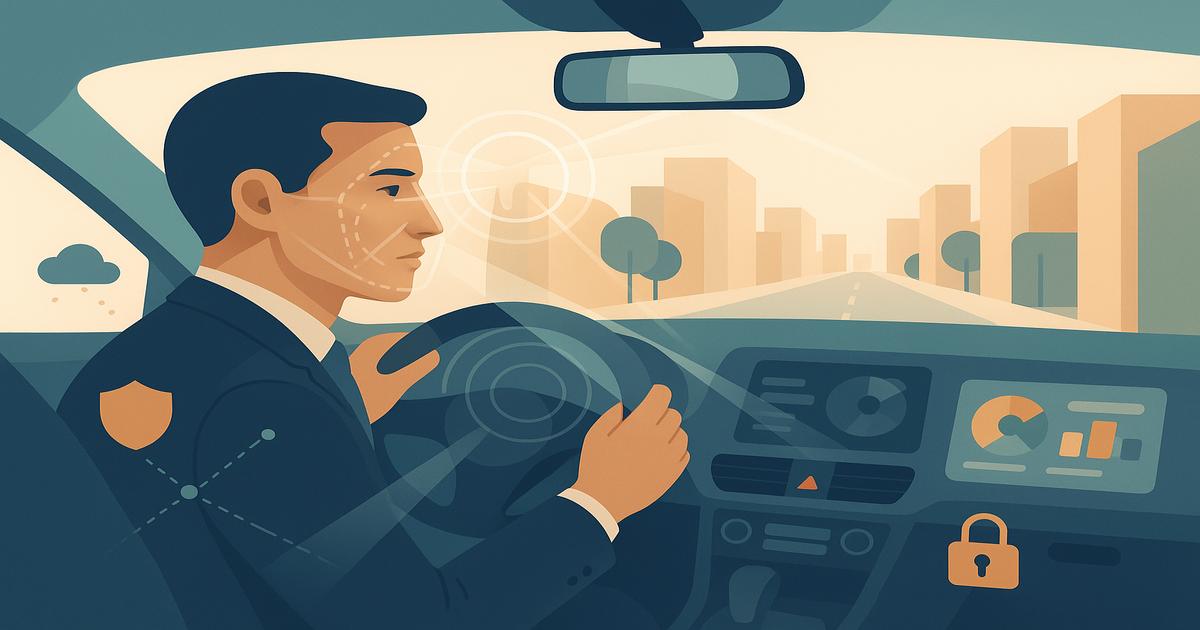
The connected car is no longer just a vehicle with digital features. It is becoming a rolling data terminal capable of observing, recording and transmitting detailed information about how people drive. This shift is transforming the relationship between consumers, manufacturers, service providers and the insurance industry.
What once seemed like a convenience layer—navigation, remote diagnostics, connected apps or usage-based services—now sits at the center of a broader debate: when a person buys a product, are they also entering a data relationship that may continue long after the purchase?
What Driving Behavior Can Reveal
Driving data can be highly granular. A connected vehicle may generate information about location, speed, acceleration patterns, sudden braking and whether the car is frequently used at night. Individually, each data point may appear limited. Together, they can build a detailed profile of a driver’s habits.
For example, frequent harsh braking may be interpreted as risky driving. Regular late-night trips may be treated differently from daytime commuting. Rapid acceleration, recurring routes and speed patterns can all contribute to a broader behavioral picture.
This type of data is valuable because it goes beyond basic identity or ownership information. It reflects real-world conduct. In financial and insurance contexts, behavioral data can be especially powerful because it may influence how risk is assessed, priced or categorized.
Why Insurers Care About Vehicle Data
Insurance has always depended on evaluating risk. Traditionally, insurers have relied on factors such as vehicle type, claims history or broad demographic indicators. Connected cars introduce another layer: actual driving behavior.
If driving information is shared with companies linked to the insurance sector, it can potentially support more personalized assessments. In theory, safer drivers could be recognized more accurately. In practice, however, the same information could also be used in ways consumers may not expect.
A driver might purchase a car for transportation, not realizing that the vehicle can become a source of commercially valuable behavioral data. The key issue is not only that the data exists, but that it may move beyond the original product relationship into adjacent industries.
That movement of data is where public concern grows. Consumers may understand that a connected vehicle needs data to function. They may be less aware that their driving patterns could become part of a wider commercial ecosystem.
Regulation Is Catching Up With Data Monetization
The involvement of authorities signals a clear trend: regulators are paying closer attention to how personal data is collected, transferred and monetized. This is especially important when the data comes from products that people use in ordinary daily life.
Connected vehicles sit at the intersection of mobility, personal privacy and financial services. Because the information can include precise location and behavior-based signals, the stakes are significant. Regulators are increasingly focused on whether consumers understand what is being collected, who receives it and how it may be used.
This scrutiny reflects a broader shift in the digital economy. Data sales are no longer limited to websites, apps or online advertising. Physical products are becoming data-generating platforms. Cars are one of the most visible examples because they combine movement, identity and behavioral patterns in a single connected environment.
The Product Is Also a Data Channel
A growing number of consumer products now operate with two business models at once. The first is the visible one: the product sold to the customer. The second is less visible: the data generated through ongoing use.
In the case of connected cars, the customer may see the vehicle as a one-time purchase or a financed asset. But the car may also produce information that has continuing economic value. That value can attract interest from companies beyond the manufacturer, including firms connected to insurance.
This changes how consumers should think about ownership. Buying a connected product may no longer mean simply acquiring hardware. It may also mean participating in an ongoing data exchange, whether fully understood or not.
The challenge is that data collection often happens in the background. Drivers do not necessarily receive a clear, intuitive reminder every time information about speed, braking or night-time use is recorded. The absence of friction makes the process efficient, but it can also make it opaque.
Trust Will Define the Future of Connected Mobility
The future of connected cars will depend heavily on trust. Consumers may accept data collection when it delivers clear benefits and when the terms are understandable. They are less likely to accept it if they feel their behavior is being quietly converted into a commercial asset.
For companies, the lesson is straightforward: data strategies cannot be treated as a hidden revenue layer. They must be designed with transparency, accountability and regulatory expectations in mind. For insurers and related firms, access to driving behavior may be valuable, but the use of that information must be handled with care.
Connected cars show how financial innovation is increasingly tied to data access. The same information that can improve risk models can also create privacy concerns. The balance between innovation and protection will be one of the defining issues as everyday products become more connected.
The car has always said something about its owner. Now it may say far more about its driver. And in the modern data economy, that information has become a business in its own right.
Do you have questions?
Write to us!
We are at your disposal to answer all your questions and schedule a free consultation.
QuickExchange™
Via A. Maspoli, 7
(Sassi Center)
Opening hours
Mon–Fri 08:30–19:00
1st / last Sat 08:00–12:00
Sunday Closed
Public holidays Closed
Via Colombera, 10
Opening hours
Mon–Fri 09:00–19:30
Saturday 08:00–16:00
Sunday Closed
Public holidays Closed
Via Pobiette, 2
(Stabile Taiana)
Opening hours
Mon–Fri 08:30–18:00
Saturday Closed
Sunday Closed
Public holidays Closed
OFFICE CLOSED
August 10-21
Groucho Marx