

When Privacy Breaks: The Partner Ecosystem Becomes the New Security Perimeter
Personal data leakage shows why privacy now depends on the entire partner ecosystem, not just one company.
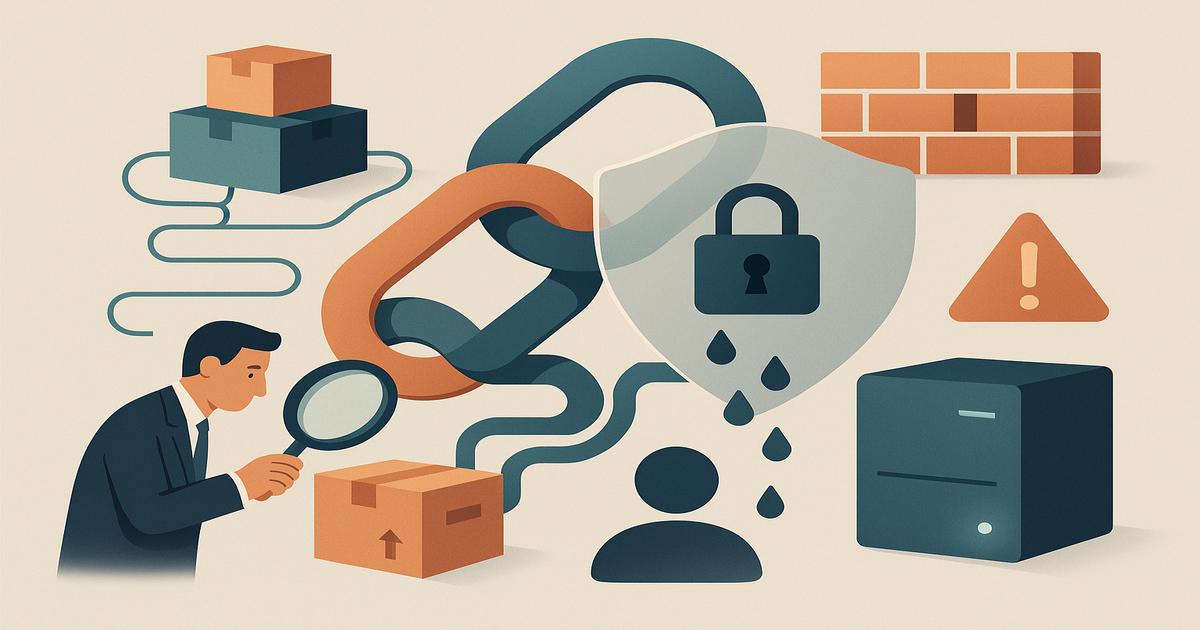
Unauthorized access to user personal data: why it matters beyond the incident
Personal information associated with LastPass users ended up in the hands of unauthorized parties. Regardless of the specific dataset involved, the strategic takeaway is clear: once user data escapes expected controls, the harm is no longer limited to a single system. Exposure can create downstream risks such as targeted social engineering, account takeover attempts, and long-tail reputational damage.From a fintech and financial-innovation perspective, this kind of event is especially consequential because personal data is often the starting point for fraud. Even when critical credentials are not directly leaked, attackers can combine exposed identifiers with publicly available information to craft convincing impersonation attempts. In modern digital finance, “identity” is a composite built from many fragments; any fragment that leaks increases the probability of successful abuse.
The trigger: a breach at a third-party provider (Klue)
The incident did not originate from a direct compromise of the core company alone. It was rooted in a breach affecting a third-party provider—Klue—which then became the gateway for exposure. This is a defining characteristic of contemporary security failures: the initial foothold is frequently obtained where oversight is thinner, processes are inconsistent, or the security posture is simply different.A helpful way to understand this dynamic is to consider that organizations increasingly “rent” capabilities from specialized vendors: analytics, customer communication tools, productivity platforms, and operational support services. Each additional integration can introduce new data flows—sometimes containing personal data—into environments outside the organization’s immediate control. When one vendor becomes compromised, the incident can spill over into multiple clients, even if those clients maintain strong internal security practices.
Digital supply chain as a compromise vector
This episode underscores a wider pattern: the digital supply chain has become one of the most reliable pathways for compromise. Historically, organizations thought in terms of defending their own perimeter—networks, endpoints, applications. Today, data moves continuously across SaaS platforms, contractors, service providers, and partner ecosystems. The “attack surface” becomes a mesh of interconnected entities.The supply-chain vector is particularly effective for attackers for three reasons: 1. Asymmetry of effort: It can be easier to compromise one vendor than to breach many well-defended targets directly. 2. Shared access paths: Vendors often have privileged connectivity, administrative tooling, or automated data pipelines that bypass normal user friction. 3. Trust by default: Organizations are operationally incentivized to assume partners are safe once procurement is complete, which can reduce vigilance over time.
For companies operating in fintech or adjacent sectors, this should be interpreted as a governance issue as much as a technical one. If customer data is processed anywhere outside the organization, that external environment becomes part of the risk equation.
The “new perimeter” of privacy is the ecosystem, not the company
The incident reframes privacy protection as an ecosystem problem. The boundary of responsibility can no longer stop at an organization’s own infrastructure; it must extend to the network of partners that touch user information. This “new perimeter” demands a different operating model—one that treats third-party relationships as ongoing risk, not a one-time vendor selection decision.In practice, that means privacy and security controls should be designed around data movement rather than corporate charts. If a partner has access to user personal data, then privacy assurances must be evaluated end-to-end: how data is shared, where it is stored, who can access it, and what happens when something goes wrong. The key strategic shift is continuous accountability across the partner ecosystem.
Repetition of exposures and the compounding impact on user trust
The most damaging element in many high-profile privacy events is not a single occurrence, but recurrence. When users see repeated episodes of exposure, they adjust their behavior: they become more skeptical, less willing to store sensitive information, and more likely to churn to alternatives. Trust, once reduced, becomes expensive to rebuild—particularly in services that position themselves as guardians of user security.Repeated exposure also changes the narrative. Instead of an isolated incident, stakeholders begin to interpret events as a pattern, questioning whether governance, vendor management, and privacy-by-design practices are sufficiently mature. In competitive markets, this can become a differentiator: users and enterprise buyers increasingly evaluate not only features and price, but also whether a provider can reliably manage an ecosystem of partners without turning those relationships into liabilities.
What forward-looking organizations should learn
This situation highlights a modern rule of privacy: user data protection is only as strong as the weakest external link that handles it. Organizations must internalize that the ecosystem is the operational perimeter—and that recurring exposure has a compounding cost in user confidence. The companies that win trust in the next phase of digital finance will be those that treat partner ecosystems as first-class security domains, not invisible dependencies.Do you have questions?
Write to us!
We are at your disposal to answer all your questions and schedule a free consultation.
QuickExchange™
Via A. Maspoli, 7
(Sassi Center)
Opening hours
Mon–Fri 08:30–19:00
1st / last Sat 08:00–12:00
Sunday Closed
Public holidays Closed
Via Colombera, 10
Opening hours
Mon–Fri 09:00–19:30
Saturday 08:00–16:00
Sunday Closed
Public holidays Closed
Via Pobiette, 2
(Stabile Taiana)
Opening hours
Mon–Fri 08:30–18:00
Saturday Closed
Sunday Closed
Public holidays Closed
OFFICE CLOSED
August 10-21
John Kenneth Galbraith