

Block Inc. Turns On Bitcoin Payments for Merchants via Lightning in U.S. Rollout
Block Inc. is rolling out Bitcoin payments via Lightning, automatically enabled for roughly one million merchants in the U.S.
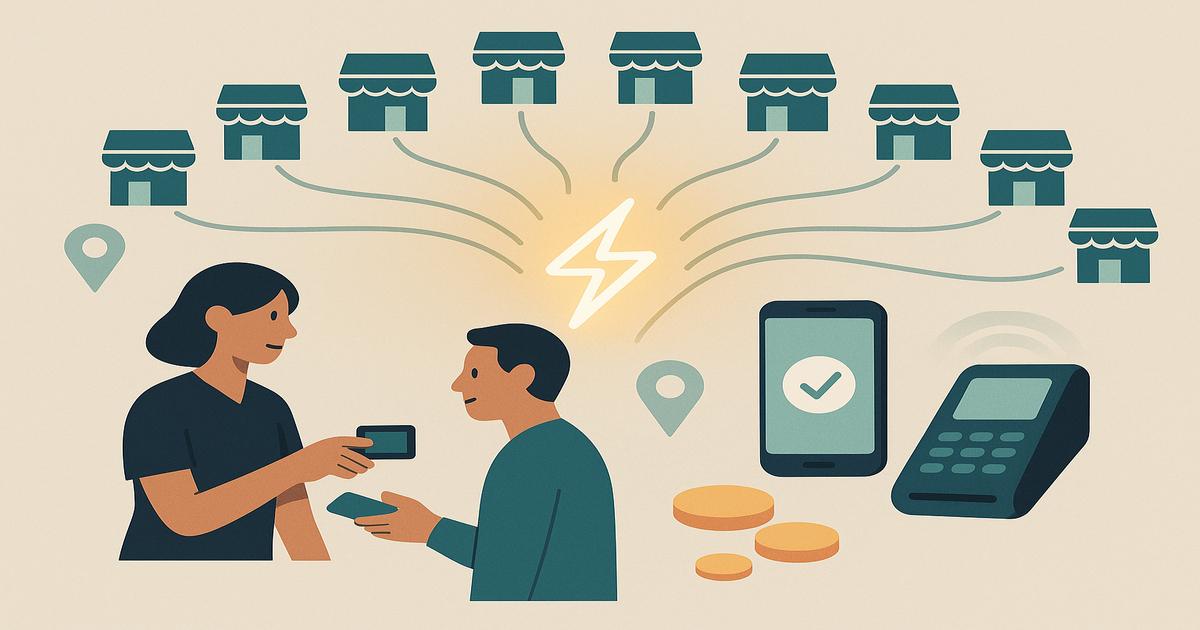
A major payments platform adds Bitcoin at checkout
Block Inc. (Square) has enabled Bitcoin payments, marking a notable step in the practical use of digital assets for everyday commerce. Rather than positioning Bitcoin solely as an investment product, this move places it inside the familiar flow of retail payments—where speed, reliability, and customer experience matter as much as the underlying technology.For the fintech industry, the significance is less about headlines and more about distribution. When a large payments provider introduces a new tender type, it can immediately influence how merchants think about acceptance, how consumers consider spending, and how other platforms prioritize similar integrations.
Automatic activation lowers barriers for merchants
A defining element of this initiative is that the functionality is being activated automatically for merchants. In payments, optional features often fail to reach meaningful adoption because they require busy operators to opt in, configure settings, train staff, and update signage or workflows. Automatic enablement flips the default: instead of “try it if you have time,” it becomes “it’s available unless you choose otherwise.”This matters because merchant enablement is usually the hardest part of scaling a new payment method. A small café, a mid-sized online retailer, and a local services provider all have different operational realities; few have the bandwidth to experiment with payment innovation. By streamlining the merchant-side decision-making, Block Inc. reduces friction and accelerates real-world usage.
In practice, automatic activation can also produce more consistent consumer experiences. When customers encounter the option more frequently across different stores, it shifts Bitcoin payments from a novelty into something recognizable, which is essential for building habits.
Lightning Network integration targets speed and usability
The integration is being delivered through the Lightning Network. This choice is strategically aligned with the requirements of retail payments, where waiting can undermine trust at the point of sale. Lightning is designed to support fast, low-latency transactions, which is critical when a cashier line is forming or when an e-commerce checkout must complete before a customer abandons the cart.From a product strategy perspective, Lightning also enables a clearer separation between “Bitcoin the asset” and “Bitcoin the payment rail.” For merchants, what matters is that a payment can be accepted quickly and confirmed in a way that fits the rhythm of commerce. For consumers, the key is that paying feels comparable to other digital methods—simple, fast, and predictable.
Consider a common retail scenario: a customer buys a low-cost item where any extended confirmation time would be unacceptable. Lightning’s design is aimed at making that scenario workable. Similarly, for digital services—where immediate access is expected—Lightning-style instant settlement better matches user expectations.
One million merchants expands the real-world footprint
The scale is substantial: roughly one million merchants are involved. In fintech, distribution often determines outcomes more than technology does. A capability that exists on paper but reaches only a small subset of stores remains an experiment. A capability that reaches a large merchant population becomes infrastructure.A million merchants also implies diverse merchant categories, which is important for payments adoption. Consumers are more likely to try a new payment method if it works in multiple contexts: daily retail, occasional purchases, and routine services. Broad availability increases the probability that consumers will encounter Bitcoin payments in normal life, rather than needing to seek out specialist locations.
For the industry, this scale can also create second-order effects. When a large merchant base gains access to a new payment option, surrounding ecosystems—wallet providers, point-of-sale training, customer support scripts, and payment analytics—tend to adapt quickly.
U.S. rollout began March 30, setting the market testbed
The rollout started in the United States from March 30, establishing the initial environment where performance, user behavior, and operational edge cases will be observed. The U.S. is a high-volume, card-dominant market with mature payment expectations. That makes it a meaningful proving ground: if Bitcoin payments can be introduced without disrupting merchant operations or customer experience, the model becomes easier to replicate in other geographies later.Timing also matters. A phased rollout allows the provider to monitor adoption patterns, support loads, and any friction points that emerge at scale. Even with automatic activation, real-world payments systems must handle exceptions—refund behavior, customer questions, and varying merchant workflows. Starting in one market provides the operational feedback loop needed to refine the experience.
What this signals for fintech and financial innovation
With Bitcoin payments enabled, automatically activated for a large merchant population, delivered via the Lightning Network, and launched in the U.S. beginning March 30, Block Inc. is testing a clear thesis: mainstream payment platforms can make Bitcoin usable as a transaction method at scale when integration choices prioritize speed and merchant simplicity.If the experience meets expectations, the broader implication is that Bitcoin payments may shift from being a niche capability to a standard option within large payment ecosystems—less about ideology, more about execution and reach.
Do you have questions?
Write to us!
We are at your disposal to answer all your questions and schedule a free consultation.
QuickExchange™
Via A. Maspoli, 7
(Sassi Center)
Opening hours
Mon–Fri 08:30–19:00
1st / last Sat 08:00–12:00
Sunday Closed
Public holidays Closed
Via Colombera, 10
Opening hours
Mon–Fri 09:00–19:30
Saturday 08:00–16:00
Sunday Closed
Public holidays Closed
Via Pobiette, 2
(Stabile Taiana)
Opening hours
Mon–Fri 08:30–18:00
Saturday Closed
Sunday Closed
Public holidays Closed
OFFICE CLOSED
August 10-21
John Kenneth Galbraith