
Bitcoin in Pension Funds: What It Means When a Major Player Opens Up to Digital Assets
Potential demand no longer comes solely from retail investors or specialist operators, but also from institutions managing long-term savings
A Sign of Maturity: Major Pension Funds Turn Their Attention to Digital Assets
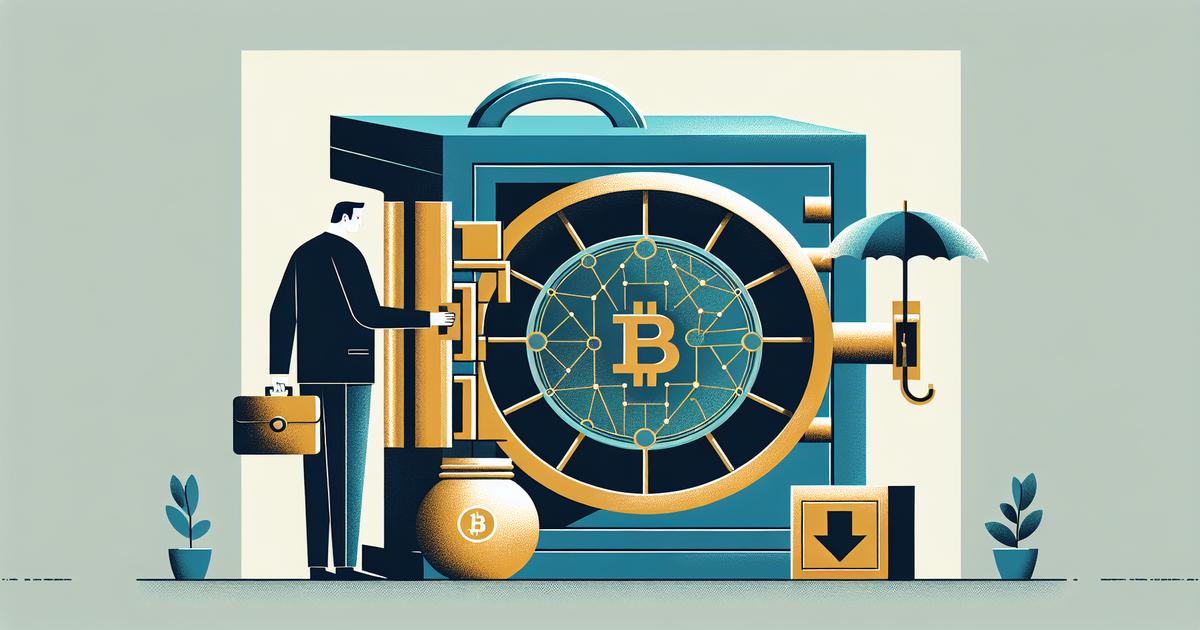
When a large pension fund considers adding Bitcoin and other digital assets to its offering, the message to the market is clear: potential demand no longer comes solely from retail investors or specialist operators, but also from institutions managing long-term savings. A pension fund, by definition, operates on multi-decade time horizons, with stringent constraints on risk, transparency and governance. For this reason, the prospect of introducing digital assets into a pension product represents an important step forward in terms of institutional adoption.
The interest does not necessarily reflect a tactical "bet" on price. In many cases, it is a broader assessment: diversification potential, evolving member preferences, and the growing relevance of digital assets as an investable category. In other words, the point is not simply whether Bitcoin "goes up or down", but whether it is becoming a component that some investors want to be able to include — in a regulated manner — even within their pension plans.
Why It Matters: The Scale and Responsibility of a Fund With Millions of Members
The significance increases considerably when the fund in question is one of the country's largest by membership. This is not a financial boutique experimenting with limited capital: we are talking about an organisation with a base of approximately 2.2 million members. This scale makes the strategic assessment doubly relevant, because any decision on the product offering has implications for communication, financial education, internal controls and operational processes.
A fund of this size, before making Bitcoin and other digital assets available, must address very concrete questions: how to ensure custody, how to measure and communicate volatility, how to manage liquidity and how to integrate with existing procedures. Even if the planned allocation were modest, the perceived effect is significant: it normalises the idea that digital assets can coexist alongside traditional instruments within a pension context.
Access to Digital Assets Within a Pension Product: What Changes for the Investor
Allowing access to Bitcoin and other digital assets through a pension fund is not simply equivalent to "buying crypto". What changes above all is the channel and the context. A member could gain exposure without having to open accounts on external platforms or directly manage private keys, transfers and complex operational procedures. In terms of user experience, it is more akin to selecting an investment option within a guided portfolio.
A useful example: imagine a member who already chooses between more cautious or more dynamic profiles for their pension. If the fund were to introduce a digital asset component, it could be offered as an additional option — perhaps with allocation limits or specific rules. This would allow interested members to gain exposure, while those who are not could ignore it entirely and maintain their traditional strategy.
Bitcoin and "Other Digital Assets": A Category, Not a Single Instrument
A central element is that the assessment covers not only Bitcoin, but also other digital assets. This implies a category-level consideration: defining what falls within the scope of "digital assets", how to select instruments, and according to what quality and risk criteria. In an institutional setting, building the offering cannot be improvised: it must meet requirements of consistency, replicability and accountability.
For example, the exposure could be structured as a basket of digital assets or as distinct instruments with different risk levels. In either case, the truly innovative aspect is making this asset class accessible in a structured way, within a product designed for life goals such as retirement.
Market Impact: From Interest to Legitimisation
The most significant development is not just a potential launch, but the very fact that a large pension fund is seriously exploring this direction. Institutions often act as market "validators": when they explore an allocation or access to digital assets, they set a precedent and push the entire ecosystem — advisors, infrastructure and processes — to grow in maturity.
Looking ahead, the inclusion of Bitcoin and other digital assets in pension contexts could help transform the way people perceive this asset class: no longer merely a speculative niche, but a potentially integrable component — with all due caution — within long-term financial planning.
Do you have questions?
Write to us!
We are at your disposal to answer all your questions and schedule a free consultation.
QuickExchange™
Via A. Maspoli, 7
(Sassi Center)
Opening hours
Mon–Fri 08:30–19:00
1st / last Sat 08:00–12:00
Sunday Closed
Public holidays Closed
Via Colombera, 10
Opening hours
Mon–Fri 09:00–19:30
Saturday 08:00–16:00
Sunday Closed
Public holidays Closed
Via Pobiette, 2
(Stabile Taiana)
Opening hours
Mon–Fri 08:30–18:00
Saturday Closed
Sunday Closed
Public holidays Closed
OFFICE CLOSED
August 10-21
John Kenneth Galbraith