

A 2-Block Reorg on Bitcoin: What It Means When a Pool Mines a Long Consecutive Sequence
A 2-block reorg was recently observed — an uncommon event, but one fully compatible with how the protocol works
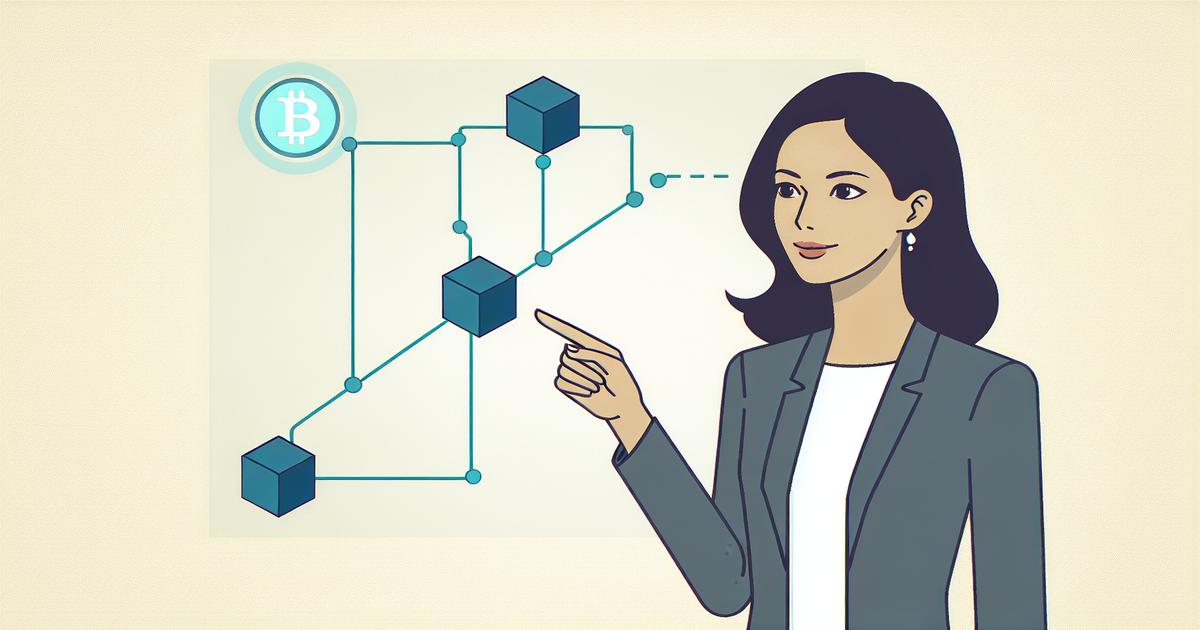
When the Network "Revises" Its Recent History
Bitcoin is designed to be extremely robust, but it is not immutable to the millisecond. In the course of day-to-day operations, the network may need to realign on which version of the most recent chain is correct. This phenomenon is known as a blockchain reorganisation, or "reorg".
In a recent case, a 2-block reorg was observed — an uncommon event, but one fully compatible with how the protocol works. A reorg of this size means that two blocks which initially appeared valid and part of the "official" history were subsequently replaced by an alternative sequence, which the network deemed the prevailing one.
The Role of Consecutive Block Sequences
One factor that can favour a reorg is the production of many consecutive blocks by the same actor. In this instance, Foundry USA produced seven blocks in a row. A sequence this long increases the likelihood that the chain associated with it becomes the one most followed by nodes, consolidating its position as the valid chain.
To understand the practical effect, imagine two "trains" setting off almost simultaneously on parallel tracks for a short stretch (two versions of the chain). If one of the trains accelerates and quickly gains the lead (a sequence of consecutive blocks), the network tends to "choose" that path as its reference, because it represents the most advanced and coherent progression of the chain at that moment.
What Orphan Blocks Are and Why They Appear
When a reorg occurs, the blocks excluded from the main chain become "orphans". In this episode, two blocks that had been produced by AntPool and ViaBTC were rendered orphan by the reorganisation.
It is important to clarify that "orphan" does not mean "invalid block" or "malicious block": it is often simply a valid block that loses a temporary competition between two branches of the chain. The competition arises because in Bitcoin multiple miners can find blocks at very close intervals; until the network converges on a single branch, a brief ambiguity exists. Once one branch prevails, the other is abandoned.
Operational Implications: Finality and Risk Management
A 2-block reorg has concrete implications above all for those managing bitcoin payments and collections. In practical terms, a transaction that appeared confirmed on a block that subsequently became orphan may temporarily revert to a "pending" state, until it is included in a new block on the main chain.
For this reason, professional practice thinks in terms of "probabilistic finality": the more confirmations a transaction accumulates, the lower the probability that it will be affected by a reorganisation. Events such as a 2-block reorg are a reminder that confirmation policies — how many confirmations to wait for before considering a payment final — are not a formality, but a risk control.
An example: a merchant who delivers a digital good immediately after 1 confirmation takes on a higher risk profile than one who waits for more confirmations, because a reorg — though rare — can alter the status of that transaction in the short term.
Mining Pools and Dynamics of Temporary Dominance
The fact that Foundry, in this instance, outpaced pools such as AntPool and ViaBTC on the valid chain does not necessarily imply a structural long-term shift. In mining, even with relatively stable hash rate shares, statistical variation exists: within a short time window, a pool can "run lucky" and accumulate several consecutive blocks.
However, when a single pool manages to produce a long chain of sequential blocks, the systemic effect is clear: its version of recent history tends to become the reference, and other blocks found in the meantime by different pools may be displaced and become orphans.
Why These Events Matter for Fintech and Payment Infrastructure
From a fintech perspective, a reorg is an operational reminder: integrating Bitcoin does not simply mean managing addresses and fees, but also defining robust procedures for reconciliation, confirmation management and transaction status monitoring.
A 2-block reorganisation remains a rare event, but one sufficient to stress-test processes that are overly "optimistic". Mature infrastructures handle these cases automatically: they recalculate transaction status if the reference blocks change and apply policies consistent with the acceptable level of risk. In other words, resilience does not come from the absence of anomalous events, but from the ability to handle them without surprises.
Do you have questions?
Write to us!
We are at your disposal to answer all your questions and schedule a free consultation.
QuickExchange™
Via A. Maspoli, 7
(Sassi Center)
Opening hours
Mon–Fri 08:30–19:00
1st / last Sat 08:00–12:00
Sunday Closed
Public holidays Closed
Via Colombera, 10
Opening hours
Mon–Fri 09:00–19:30
Saturday 08:00–16:00
Sunday Closed
Public holidays Closed
Via Pobiette, 2
(Stabile Taiana)
Opening hours
Mon–Fri 08:30–18:00
Saturday Closed
Sunday Closed
Public holidays Closed
OFFICE CLOSED
August 10-21
Groucho Marx