

iPhone, crypto and new threats
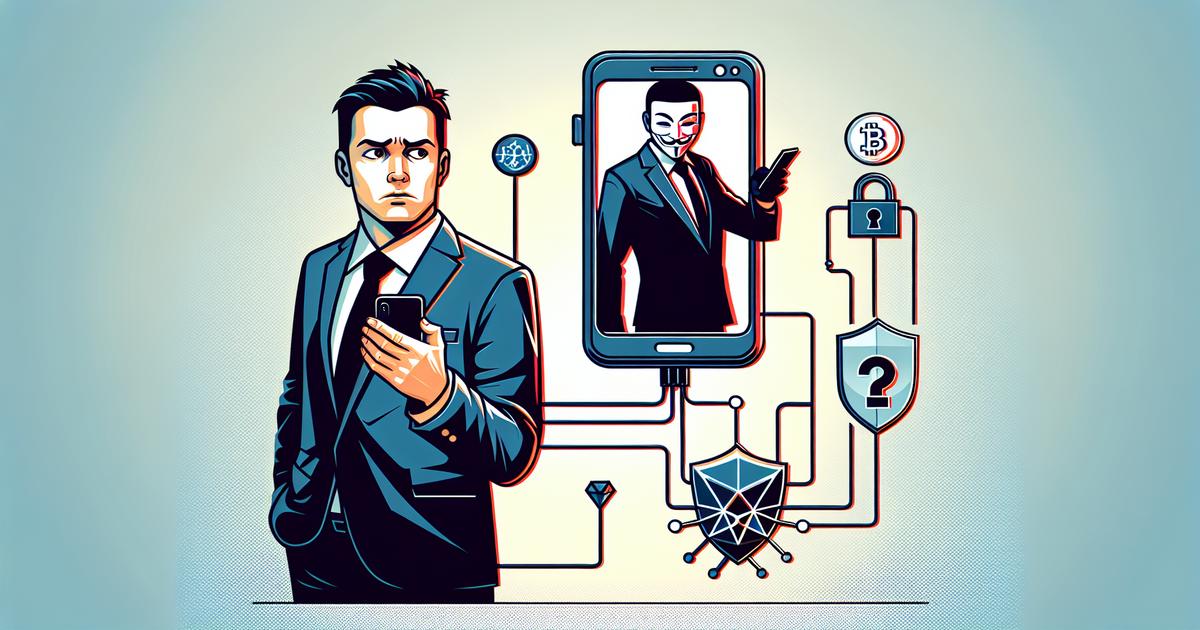
The “web-to-wallet” attack, where simply visiting a web page can trigger a technical chain targeting cryptographic secrets.
A paradigm shift: from “text-based” phishing to technical device compromise
For years, the theft of digital assets has been mainly associated with deceptive emails, fake customer support and social engineering scams. Today, however, a more dangerous model is emerging: the “web-to-wallet” attack, where simply visiting a web page can trigger a technical chain capable of bypassing user defenses and directly targeting cryptographic secrets.
The strategic point is not only that exploits for iOS exist, but that they can be organised into complete chains, combining multiple vulnerabilities (including non-public ones) and maintaining compatibility across a wide range of operating system versions. This greatly expands the attack surface: it is no longer necessary to target a user on a specific build, because the attacker can dynamically select the most suitable chain for the detected device.
The real target: the seed phrase as the “universal key” of the crypto economy
In the Bitcoin and crypto world, the seed phrase (or backup phrase) is not just sensitive data: it represents ownership itself. Whoever obtains it can reconstruct the wallet, move funds and often bypass any application-level protection. For this reason, criminals are shifting their attention from traditional credential theft to a more “definitive” objective.
Modern techniques include scanning textual content on the device in search of typical patterns and keywords (“seed phrase”, “backup phrase”, references to bank accounts) and identifying popular crypto apps to attempt data exfiltration or operations that may lead to the theft of funds. It is an industrial approach: it does not seek a single login, it seeks control of the entire digital wealth.
A practical example: a user saves the seed in a note, or copies it into a “temporary” document before printing it. In a compromise scenario, that action becomes a breaking point: there is no need to convince the user to enter the phrase on a website — it is enough to find it where it already exists.
Smart distribution: JavaScript, profiling and selective delivery
A distinctive element of the most sophisticated campaigns is adaptive distribution. The delivery mechanism is not necessarily a malicious app: it can be a JavaScript framework injected into compromised websites or embedded in fake pages imitating financial brands. When the page loads, the script profiles the device (model, iOS version, browser characteristics) and decides whether or not to deliver the payload.
This selectivity serves two purposes: 1. Effectiveness: delivering the right exploit to the right target. 2. Stealth: reducing the probability of detection, because only a fraction of visitors (perhaps from a specific geolocation) actually see the attack.
From a risk management perspective, this means that traditional metrics (“we received few reports”, “we do not see widespread anomalies”) can be misleading: an attack can be active and profitable even if it affects only a small number of high-value targets.
Infrastructure reuse and the “hybridisation” of espionage and financial crime
Another structural trend is the reuse of tools and infrastructures across different campaigns. The same technical logic may first appear in geopolitical contexts and later migrate toward financial targets, or vice versa. This creates a grey area in which advanced-level capabilities and tools are no longer confined to espionage but become available for fraud and digital asset theft.
For the fintech sector and for those operating with crypto products, the consequence is clear: the adversary is no longer just the opportunistic scammer. It is an ecosystem that experiments, adapts and scales — often using credible phishing techniques (clone websites linked to finance) to bring the user to the attack trigger point.
Pragmatic defence: patching, advanced modes and seed hygiene
The first measure remains simple but decisive: keep iOS updated. Exploit chains share one characteristic — they are not eternal. When the platform closes vulnerabilities, the attacker loses effectiveness or must invest again to rebuild the chain.
If updating is not possible, it may make sense to consider advanced defensive measures such as Lockdown Mode, specifically designed to reduce attack surfaces used in sophisticated operations. It is not the most convenient solution for everyone, but it is a rational choice for high-exposure profiles (crypto operators, treasury departments, public figures, exchange teams, high-net-worth individuals).
Finally, the most important rule remains organisational: the seed phrase should never be stored in plain form on a general-purpose device. Not in notes, not in screenshots, not in files protected only by a password. Alternative strategies include offline media and backup processes that do not create accessible digital copies.
In 2026, crypto security on mobile devices is no longer just a matter of “not clicking suspicious links”: it is a discipline combining patch management, device hardening and rigorous key management. Those designing financial services and those holding digital assets must treat this reality as a primary operational risk, not as an exception.
Do you have questions?
Write to us!
We are at your disposal to answer all your questions and schedule a free consultation.
QuickExchange™
Via A. Maspoli, 7
(Sassi Center)
Opening hours
Mon–Fri 08:30–19:00
1st / last Sat 08:00–12:00
Sunday Closed
Public holidays Closed
Via Colombera, 10
Opening hours
Mon–Fri 09:00–19:30
Saturday 08:00–16:00
Sunday Closed
Public holidays Closed
Via Pobiette, 2
(Stabile Taiana)
Opening hours
Mon–Fri 08:30–18:00
Saturday Closed
Sunday Closed
Public holidays Closed
OFFICE CLOSED
August 10-21
John Clifton "Jack" Bogle