
Turin Hackathon to Explore AI and Stablecoins Built on Bitcoin
Turin will host a Bitcoin hackathon focused on AI, RGB and self-custodied dollar stablecoins.
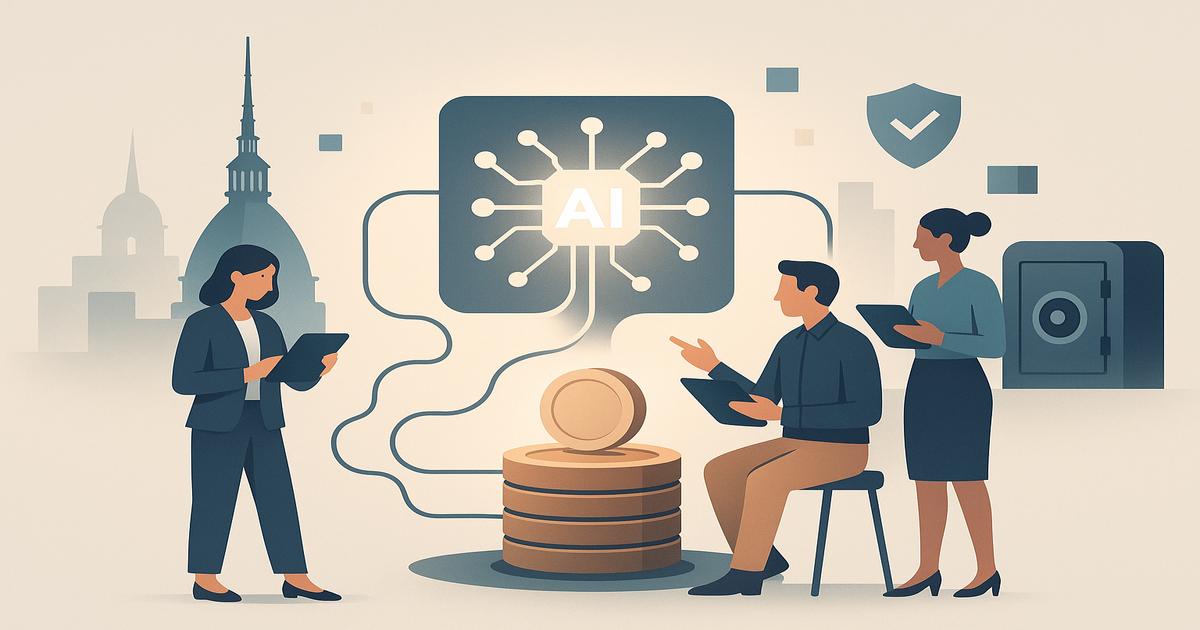
Turin is set to become a testing ground for a new generation of Bitcoin-based financial applications on 17 and 18 October, when developers, designers and product builders gather for a hackathon centered on the convergence of artificial intelligence and stablecoins.
The event’s focus is clear: practical experimentation. Rather than treating Bitcoin only as a settlement network or store of value, participants will be asked to imagine applications where dollar-referenced digital currencies, self-custody and locally executed AI models work together in real-world financial workflows.
This combination reflects one of the most relevant questions in fintech today: how can intelligent software interact with digital money without forcing users to surrender control of their assets or rely entirely on centralized infrastructure?
A Two-Day Laboratory for Bitcoin-Based Finance
Hackathons are useful because they compress innovation into a short, intense timeframe. In Turin, the 17 and 18 October format will give teams limited time to turn concepts into working prototypes, making the event less about theory and more about execution.
The challenge is not simply to create another wallet interface or payment demo. The core theme points toward applications where artificial intelligence assists users while stablecoins on Bitcoin provide the financial layer. That could mean tools for personal finance, automated transaction organization, payment support, accounting flows or other services where software intelligence and programmable digital value intersect.
By concentrating on Bitcoin, the hackathon frames the discussion around a monetary network with a distinct design philosophy. By adding stablecoins, it introduces the practical need for units of account that track the dollar. By requiring self-custody, it brings the user back to the center of the system.
Why Dollar-Pegged Digital Currencies Matter
For many users, a digital currency tied to the dollar offers a familiar reference point. Bitcoin may be the foundational network in this setting, but a dollar-pegged asset can be useful for people and businesses that need price stability in everyday operations.
The important distinction in this hackathon is that these applications are expected to involve self-custodied digital currencies. In other words, the user should retain direct control rather than depending on an intermediary to hold the asset on their behalf.
That design choice has major implications. A self-custody model changes how apps must be built. Security, usability and recovery become central product questions. The user experience must be simple enough for mainstream adoption, yet robust enough to preserve the benefits of direct ownership.
This is where financial innovation becomes more than a slogan. A useful stablecoin application on Bitcoin must balance convenience with sovereignty. It must feel modern without recreating the same custody assumptions that digital asset technology was designed to challenge.
RGB as a Core Building Block
One of the key technologies highlighted for the Turin hackathon is RGB, which will serve as an important component for building solutions on Bitcoin.
RGB is relevant here because the event is focused on applications involving digital assets anchored to the dollar and managed in self-custody. For developers, this means working with infrastructure that can support more expressive use cases while remaining connected to the Bitcoin environment.
From a product strategy perspective, RGB opens the door to a more application-oriented view of Bitcoin. Instead of limiting the conversation to simple transfers, builders can explore how assets, interfaces and user-controlled financial tools may operate together.
The presence of RGB in the hackathon also gives participants a concrete technical direction. Teams will not be working with an abstract mandate to “combine AI and Bitcoin.” They will be encouraged to develop around a specific technology stack capable of supporting the event’s stablecoin-centered objectives.
Local AI Changes the Trust Model
The hackathon’s second major pillar is artificial intelligence, with a notable emphasis on models that run locally rather than depending by default on cloud infrastructure.
This matters because financial applications often handle sensitive information. If an AI assistant is used to interpret spending patterns, support payments or help manage digital balances, the location of computation becomes important. Running models locally can reduce reliance on remote servers and create a different relationship between the user, the app and the data being processed.
Local AI also aligns well with self-custody. Both concepts move control closer to the individual. Self-custody means users manage their own digital assets; local AI means intelligent processing can happen on the user’s own device or environment. Together, they suggest a design direction where financial tools become more private, more autonomous and less dependent on centralized platforms.
This does not make the product challenge easier. Local models require careful design, efficient execution and clear user experiences. But the direction is strategically meaningful: if digital money is moving toward user control, the intelligence layer surrounding that money may need to move in the same direction.
The Significance of Combining AI, Stablecoins and Bitcoin
The most interesting aspect of the Turin event is not any single technology. It is the combination.
Stablecoins provide a familiar value reference. Bitcoin provides the base environment for building financial applications. RGB offers a way to develop asset-oriented solutions within that context. Artificial intelligence adds a layer of automation, guidance and interaction. Local execution reinforces the broader goal of reducing unnecessary dependence on external infrastructure.
Put together, these elements point to a future where financial apps may become more personal and more independent. A user could interact with software that understands financial intent, works with dollar-pegged digital assets and preserves direct control over funds. The result is not simply a smarter wallet, but a different model for how financial software can be designed.
Turin’s Role as a Builder-Focused Venue
By hosting the hackathon, Turin will provide a setting for developers to test these ideas in a concentrated environment. The city becomes, for two days, a meeting point for Bitcoin experimentation, fintech design and applied artificial intelligence.
The success of the event will not depend only on polished demos. Its real value will come from the questions teams are forced to answer: How should AI interact with self-custodied assets? What user experience makes dollar-pegged digital currencies practical on Bitcoin? How can RGB be used to build applications that feel useful rather than experimental? What belongs on a local device, and what should never require the cloud?
These are the kinds of questions that define meaningful innovation. On 17 and 18 October, Turin will offer a focused space to begin answering them through code, prototypes and practical collaboration.
Do you have questions?
Write to us!
We are at your disposal to answer all your questions and schedule a free consultation.
QuickExchange™
Via A. Maspoli, 7
(Sassi Center)
Opening hours
Mon–Fri 08:30–19:00
1st / last Sat 08:00–12:00
Sunday Closed
Public holidays Closed
Via Colombera, 10
Opening hours
Mon–Fri 09:00–19:30
Saturday 08:00–16:00
Sunday Closed
Public holidays Closed
Via Pobiette, 2
(Stabile Taiana)
Opening hours
Mon–Fri 08:30–18:00
Saturday Closed
Sunday Closed
Public holidays Closed
OFFICE CLOSED
August 10-21
Groucho Marx