

Kazakhstan’s Gas-to-Bitcoin Opportunity Needs More Than Cheap Energy
Kazakhstan weighs a regulated path for using field gas to power Bitcoin mining.
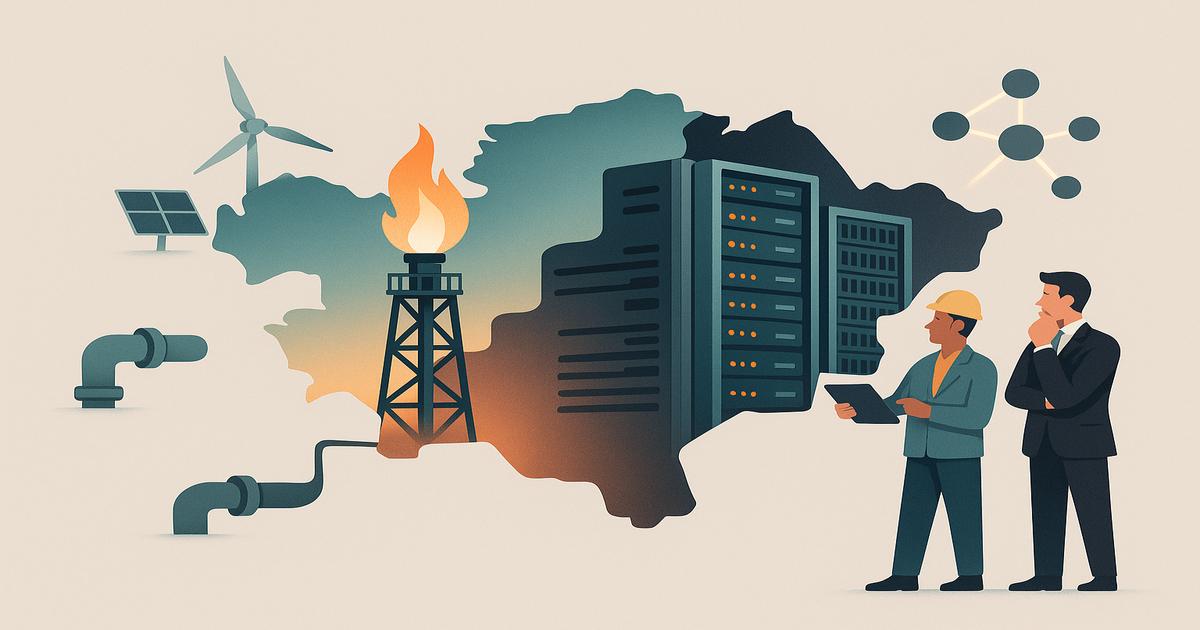
Kazakhstan is exploring a question that sits at the intersection of energy policy, industrial strategy and digital finance: can gas from production sites be integrated into Bitcoin mining under a dedicated regulatory framework?
The idea is not simply to connect mining machines to any available fuel source. The broader opportunity is to convert gas that is currently burned off or poorly monetized into electricity for digital infrastructure. If handled correctly, this could create a more efficient use of energy resources, open new revenue channels and position the country as a more sophisticated participant in the global Bitcoin mining economy.
But the key word is “handled.” Without clear rules, what appears to be an industrial opportunity can quickly become a source of operational, environmental and grid-management concerns. With the right framework, however, Kazakhstan could build a model where energy that would otherwise deliver limited value supports a flexible, controllable and investment-friendly digital sector.
From Stranded Energy to Digital Infrastructure
In many energy-producing regions, gas located near extraction sites does not always have an immediate or profitable route to market. Transport infrastructure may be limited, demand may be distant, or the economics of processing and delivery may not justify full commercialization. In those cases, the resource can end up being burned or left underused.
Bitcoin mining changes the geography of energy demand. Instead of requiring the gas to travel to a consumer, the consumer can be brought closer to the gas. Mining facilities can be installed near production areas, converting local energy into computational work that supports the Bitcoin network.
This is a very different model from traditional industrial power consumption. A factory typically needs stable logistics, labor access, supply chains and a direct connection to end markets. Bitcoin mining is more modular. It can operate in remote areas, scale in phases and adjust its activity according to available electricity.
For Kazakhstan, that flexibility matters. Gas from fields could become the foundation for localized power generation dedicated to mining infrastructure. Rather than treating underused gas as a byproduct with limited economic purpose, it could be turned into an input for a digital export industry.
Bitcoin Mining as a Flexible Power Customer
One of the most important features of Bitcoin mining is its ability to behave as a flexible electricity buyer. Mining equipment can be switched on or off more easily than many conventional industrial loads. That makes it potentially useful near energy production sites where supply conditions may vary.
In a gas-to-mining model, operators could locate power generation and mining units close to the source of energy. This reduces dependence on long-distance transmission and allows the activity to be designed around the realities of local production.
Flexibility also gives policymakers more tools. If authorities require mining facilities to operate within defined energy limits, report consumption, or curtail activity when needed, the sector can be integrated in a more disciplined way. The value is not only in consuming electricity, but in consuming it under rules that align with broader energy priorities.
That is why the regulatory conversation is central. Mining can be a productive buyer of electricity, but only if the operating environment makes clear who can participate, what energy sources can be used, how activity is measured and which obligations apply.
Regulation Will Determine the Quality of the Opportunity
Kazakhstan’s interest in specific rules for using gas from fields in mining reflects a practical reality: energy innovation requires governance. Without a dedicated framework, projects may develop inconsistently, with unclear standards and uneven oversight.
A strong regulatory model could define how gas-based mining projects are approved, how energy use is documented and how operators demonstrate compliance. It could also distinguish between mining that creates value from otherwise underutilized energy and mining that competes with more sensitive power needs.
This distinction is essential. The industrial logic of the model depends on using gas that has limited existing value, not simply diverting energy from other productive uses. Clear eligibility criteria would help ensure that the activity supports efficiency rather than creating new distortions.
Regulation can also make the sector more attractive to serious investors. Technology companies, infrastructure developers and capital providers generally prefer predictable rules. If Kazakhstan can offer a transparent legal pathway for gas-powered mining, it may attract higher-quality projects with better operational standards.
New Revenue Without Building a Traditional Export Route
The economic appeal is straightforward: gas that produces little value today could support a revenue-generating digital activity. Instead of waiting for expensive infrastructure or favorable market conditions, energy producers could monetize resources locally by supplying power to mining operations.
This does not mean Bitcoin mining is a substitute for every other energy strategy. Rather, it can be one tool in a broader industrial toolkit. In locations where gas is difficult to commercialize through conventional channels, mining can provide an additional option.
The revenue potential extends beyond the energy producer. Mining projects require equipment, power systems, site development, maintenance, connectivity and operational management. A regulated gas-to-mining sector could therefore stimulate a small ecosystem of technical services and infrastructure investment.
For policymakers, the attraction is not only the income generated by mining itself. It is also the possibility of transforming waste reduction into an investment theme. If underused gas can support digital infrastructure, Kazakhstan could present the model as both an efficiency measure and a technology-development strategy.
Reducing Waste While Building a Controlled Industry
The reduction of energy waste is one of the strongest arguments for this approach. Gas that is burned without productive use represents a missed economic opportunity. Redirecting it toward power generation for mining can increase the value extracted from existing resources.
However, sustainability depends on design. A poorly monitored system would undermine the case for the industry. Authorities would need visibility into energy sourcing, project location, operational scale and compliance with technical requirements.
This is where a controlled framework becomes more than bureaucracy. It is the mechanism that turns a promising idea into a credible sector. If projects are licensed, measured and held to consistent standards, Kazakhstan can avoid the risks of informal expansion while encouraging responsible operators.
The future of mining in energy-rich regions will likely depend on this balance. Cheap or stranded energy may attract miners, but long-term success requires legitimacy. Investors want certainty, governments want control and energy producers want reliable monetization.
A Strategic Test for Energy and Digital Policy
Kazakhstan’s consideration of dedicated rules for field-gas mining is more than a narrow policy adjustment. It is a test of how resource-rich economies can connect traditional energy assets with emerging digital infrastructure.
Bitcoin mining is often discussed only in terms of electricity consumption. Yet in the right context, it can also function as a location-flexible demand source that helps monetize energy where conventional markets fall short. For Kazakhstan, the opportunity lies in using that flexibility without allowing the sector to grow outside public oversight.
If the country succeeds, it could create a model that generates new income, reduces waste and attracts technology investment. The outcome will depend less on the existence of gas or mining equipment, and more on the quality of the rules that bring them together.
Do you have questions?
Write to us!
We are at your disposal to answer all your questions and schedule a free consultation.
QuickExchange™
Via A. Maspoli, 7
(Sassi Center)
Opening hours
Mon–Fri 08:30–19:00
1st / last Sat 08:00–12:00
Sunday Closed
Public holidays Closed
Via Colombera, 10
Opening hours
Mon–Fri 09:00–19:30
Saturday 08:00–16:00
Sunday Closed
Public holidays Closed
Via Pobiette, 2
(Stabile Taiana)
Opening hours
Mon–Fri 08:30–18:00
Saturday Closed
Sunday Closed
Public holidays Closed
OFFICE CLOSED
August 10-21
John Kenneth Galbraith